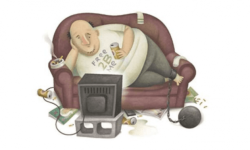
Why Does One Need to Relax


Posted on December 9th, 2009 by by Shenron
If you like this post and want to receive updates from us, please subscribe to our RSS feed.

Relaxation — it seems such an easy thing to do, yet for many people the meaning of the world is lost. What is the first thing to learn in trying to relax?

The first thing to learn whenever you are going to do something is to know the roots of a problem. If you ask me how I would get rid of my tension then I would have to know what these tensions are. If you think the tension is just physical then I would say go to a sauna and have a massage. If you think that the tension is emotional, then you would have to find a way to relax your emotions. If the tension is not only physical and emotional but also mental then you would have to know how to relax the mind. Now, if in addition to that you think you also suffer other types of tension such as generalized tension, then you will have to know how to do that. There are no magical solutions.

Do women have a higher or lower threshold of anxiety than men as a general rule?

women relaxing by the pool Why Does One Need to Relax

It varies a lot according to individual and societies. Women are not exactly treated the same way in most societies, but there’s one thing they have going for them with respect to tension. Women in most societies are allowed to show their emotions, to express their emotions. They probably have lesser ulcers, fewer heart attacks because they express themselves. They let out their internal tensions. So from that point of view women do not necessarily have a higher threshold. On the other hand men tend to suppress their feelings. But this is an extreme example because women experience just as much tension.

The whole system of achieving, pushing, preparing for success which starts from childhood up to the best years of a person’s adult life is obviously tailor-made for ulcers, high blood pressure, worry, etc.

Being tense is always related to being afraid. Being afraid, that is, of letting go of something. If we were not afraid of these things, we would be able to do it and do it better. We would not be pursuing the ends; we would rather be doing as if it would be an end .in itself. We would enjoy doing it, and without being afraid. So fear is almost experienced as a strong tension.

What is the way to handle stress and strain? Is it to tackle the problem by grappling with the bull by its horns? Is it to walk away and forget about it, let the problem solve itself?

To use a forced solution is to cause an unfavorable side effect. You cannot walk away from a problem because it will not disappear. The way to handle stress is to comprehend it at its root, to be able to know how to get rid of it permanently — the physical, emotional, mental and generalized tensions.

Is there such a thing as certain character types being able to cope with pressures and stresses better than others?

It all depends on what you mean by character types. If you say that a person who is excessively emotional can cope better with tension, he could if he is living in a society that was emotional but if you are emotional and you live in a society that is intellectual, you don’t fit nicely, then it would be very difficult to cope there.

What are a few simple methods of handling tension?

The fundamental attitude of handling tension is exactly the opposite of the attitude that we have in front of most activities we do in our lives. Most things we do we do because we force ourselves. Most people think, “I have to relax.” And they try hard to relax. But the attitude that we suggest in relaxation is one of letting go. It is one of being gentle with oneself. It is the only solution that has no side effects that loses tension permanently.

Share and Enjoy:
  • Digg
  • Sphinn
  • del.icio.us
  • Facebook
  • Mixx
  • Google
  • Blogosphere News
  • Fark
  • Furl
  • HealthRanker
  • Live
  • Ma.gnolia
  • Propeller
  • Reddit
  • Slashdot
  • SphereIt
  • Spurl
  • StumbleUpon
  • Technorati
  • TwitThis
  • Wikio

Why does one need high-fiber food


Posted on November 19th, 2009 by by Shenron
If you like this post and want to receive updates from us, please subscribe to our RSS feed.

Until recently, fiber was considered a necessary part of everyone’s diet mainly because it promoted intestinal regularity. Lack of enough fiber could cause constipation — nothing more. But medical researchers have begun to find additional important reasons for including in everyday meals enough foods that are high in fiber. Recent evidence points to the possibility that a low-fiber diet may be a factor in the high incidence of certain illnesses, among them cancer of the colon, in highly developed countries like the United States.

high fiber food Why does one need high fiber food

What is the medical evidence?

Of the illnesses now associated with low-fiber diet, evidence relating it to cancer of the colon is the best documented. A British study found this type of cancer to be extremely rare among rural Africans who eat large amounts of unrefined (whole grain) cereals and grains, and fresh fruits and vegetables—all high-fiber foods. Others in the same country who eat the traditional Western diet, which is high in meat and refined flours and sugars, all low in fiber have a higher incidence of the disease. The study’s conclusion: Because low-fiber foods move so slowly through the digestive system, any cancer-causing agents have a longer time to react with the colon—and to cause cancer.

Is there a connection between fiber and heart disease?

The evidence connecting fiber and heart disease is less direct but nonetheless attracting medical attention. High blood-cholesterol levels have been related to a high incidence of heart disease. Since it is also known that a high-fiber diet increase excretion of cholesterol from the body, the possible conclusion is that any diet reducing cholesterol levels should also help prevent heart disease. In any case, high-fiber foods, which are all from vegetable sources, are low in fat, and many are also low in calories. Presumably, the more you eat of these foods, the less you’ll be indulging in the high-fat or high-calorie foods that contribute to overweight which in turn, could result in the increased likelihood of heart disease.

High-fiber foods also may be helpful in forestalling gallbladder ailments by helping to metabolize the bile salts needed to digest fat. It has been shown; too, that fiber in the diet, by speeding the normal emptying of the colon, alleviates the symptoms of diverticulitis, an abnormality in the intestinal tract.

What are the high-fiber foods?

While there is no cause-and-effect evidence that high-fiber foods can actually prevent or cure these serious illnesses, the research now at hand makes a convincing argument for including adequate foods in your everyday meal planning.

  • Breads and cereals made with whole grains and bran.
  • Vegetables with crunchy texture when eaten raw or cooked till tender-crisp—corn, cabbage, cauliflower, broccoli, etc.
  • Tuberous root vegetables like beets, carrots, sweet potatoes.
  • Fruits and vegetables with edible tough skins and seeds such as blackberries tomatoes, summer squash, potatoes.
  • Legumes like green beans, peas, dry beans, lentils.
  • Nuts and seeds of all kinds.
  • Popcorn.

How much fiber do you need?

There is no definite rule, but try each day to have about eight servings of foods that contain some fiber—that is, most fruits and vegetables as well as wholegrain breads and cereals. One easy way to be sure you’re getting enough is to eat a normal well-balanced diet and include a daily serving of cereal.

And start a collection of recipes that give you a chance to use the high-fiber foods in appealing new ways.

Share and Enjoy:
  • Digg
  • Sphinn
  • del.icio.us
  • Facebook
  • Mixx
  • Google
  • Blogosphere News
  • Fark
  • Furl
  • HealthRanker
  • Live
  • Ma.gnolia
  • Propeller
  • Reddit
  • Slashdot
  • SphereIt
  • Spurl
  • StumbleUpon
  • Technorati
  • TwitThis
  • Wikio

Why Does Swine Flu Kill


Posted on November 16th, 2009 by by WhyDoes
If you like this post and want to receive updates from us, please subscribe to our RSS feed.

Swine flu has caused worldwide panic and may have caused absolute ban on pork were it not for a quick massive information campaign. Even in the United and Europe, swine flu is little understood, and may have gone unnoticed without informed media campaign.   Swine flu flared up showing symptoms pretty much like your average flu. What gets health authorities heads reeling is the utter unreliability of death figures. According to the US Disease Control in Atlanta, there have been 20 confirmed deaths in the USA, while the WHO (World Health Organization) in Switzerland says there are 40 in fact.

And you can’t keep the rumor from running wild: Today, even the relatively healthy people get infected, when in the past they said it’s just those with low immunity or those who have health problems to start with.  The more disturbing development is that there seems to be a parallel between swine flue and bird flu virus infection symptoms.

Swine Flu

What’s swine flu

The truth is, there are many types of swine flu viruses. The one that’s most virulent and famous is the SIV (Swine Influenza virus) which is naturally found in pigs. By 2009 SIV strains has embraced influenza C and the subtypes of influenza A, particularly H1N1. It is believed to have started in Mexico. And that’s where you have seen the worst cases.

Being a natural resident of pigs’ nostrils and respiratory tract, swine flu is therefore common all throughout the world. In the past it was widely believed that pig-human transmission is impossible and could never lead to influenza.  If at all, the worst infection could only be a slight fever. Even if you ate pork, no infection could possibly happen.  But why has  it become rabid and fatal?

Why swine flue virus can kill

When you get infected by swine virus it’s not the virus itself that gets to you and causes the symptoms, according to experts.  It’s your own immune system’s response that triggers the symptoms. So, babies and the elderly whose immune system may be weak, are  likely to come down. The first phase is they develop symptoms of pneumonia and other infections.  The elderly, especially, may exhibit worse symptoms as they have a history of past viral infections and they may not have developed immunity against these viruses.

What could kill young people and the elderly is when their immune system develops an extremely high reaction to swine virus. It leads to “cytokine storm.”

Swine Flu Symptoms

What is cytokine storm

Your own anti bodies attack your organs. Until today cytokine is little understood. What is understood, however, is that cytokines behave like your body’s hormones and they work to set up communication between your body’s cells.  Cytokines also attack your nervous system that it makes breathing very difficult. You must have seen clips of swine flu sufferers having breathing machines by their side.

The great Spanish influenza of 1918 is said to be a forerunner of today’s wine flu. You should not wonder most fatalities at that time were young people.  What makes swine flue scary isn’t so much its killer virus but the pandemic proportions they’re capable of.

But swine flu virus strains in Mexico, North America, and Asia are apparently not the same. The killer ones are reportedly contained. To keep them at bay, wash your hands every chance you get.

Share and Enjoy:
  • Digg
  • Sphinn
  • del.icio.us
  • Facebook
  • Mixx
  • Google
  • Blogosphere News
  • Fark
  • Furl
  • HealthRanker
  • Live
  • Ma.gnolia
  • Propeller
  • Reddit
  • Slashdot
  • SphereIt
  • Spurl
  • StumbleUpon
  • Technorati
  • TwitThis
  • Wikio

Why Does My PS3 Freeze


Posted on November 16th, 2009 by by WhyDoes
If you like this post and want to receive updates from us, please subscribe to our RSS feed.

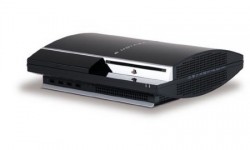
PlayStation 3 is Sony’s 3rd video game console that was met with massive success back in 2006. It was launched in Japan in 2006. PS3 is seen as the nemesis of Microsoft’s Xbox 360 and Nintendo’s Wii.

To many gamers, including you, PS3’s ultimate edge is its unified online gaming feature, the PlayStation Network: You feel like you’re a part of the game creators. PS3 has over the top multimedia features on its console. It’s also connected with PlayStation Portable. For all its cutting edge features, PS3 is not immune to occasional freezes, and you know that for a fact. Just when you’re having the best of your gaming time, everything comes to a halt. And down your momentum goes.

PS3 Freeze

Common causes of PS3 Freeze

Freezing is a rare occurrence on PS3. But the few times they do occur, they are caused by a scratched console disk and overheating.

1. Overheating. This happens when you keep your console in a stuffed room where there’s little “breathing space” for your PS3. Too much heat on your PS3 causes a “meltdown” and can easily be remedied when you put your console in a place where it’s all by itself and no other electronic machine is beside or near it.

2. Scratches. As for scratches, it’s scratches that are on the disk that can cause looping inside. This happens at millisecond speed. In which case your console isn’t actually frozen—it’s this time lag that gets repeated over and over at certain times.

PS3 freezing is generally not very serious. The worst PS3 freezing may require you to take your console to the Sony store where you bought it from.  Truth is, you can actually do basic trouble-shooting to fix the problem.

How to fix PS3 freezing

  • Take your console away from other electronic machines at home.
  • Hold in its power button for seconds till you hear a beep
  • Look at the edges of your console and look for loose cables
  • If you see one, pull it off and plug it back in
  • Air out the hard drive for a while and put it back in your console after several minutes

If not, you can try fixing it using PlayStation 3’s repair guide.  It’s a complete how-to with detailed photos.

PS3 Repair Guide summary

PS3 Freeze

In brief, this is how you do it:

  • Carefully take your console apart.
  • Check your console’s CPU and GPU (you will see a white paste that may be cracked and maybe unevenly spread– you need to clean this well)
  • Clean your console’s GPU and CPU with dry paper. If you have to use sand-paper, don’t choose an extremely rough one.
  • Do it on a flat surface till the surface is totally clean (if there’s a need, you can purchase Arctic Silver 5 Compound) Use this on your console’s CPU and GPU: Apply on both surfaces thinly and evenly.
  • The thin distribution across the surface makes sure that every single gap is covered.
  • Finally, put the heat sink cap back on.

Play on and have fun!

Share and Enjoy:
  • Digg
  • Sphinn
  • del.icio.us
  • Facebook
  • Mixx
  • Google
  • Blogosphere News
  • Fark
  • Furl
  • HealthRanker
  • Live
  • Ma.gnolia
  • Propeller
  • Reddit
  • Slashdot
  • SphereIt
  • Spurl
  • StumbleUpon
  • Technorati
  • TwitThis
  • Wikio

Why Does My Scalp Itch


Posted on November 16th, 2009 by by WhyDoes
If you like this post and want to receive updates from us, please subscribe to our RSS feed.

Not everyone who scratches his scalp has a big problem. You scratch your scalp when you’re annoyed in public, or you’re probably in deep thought. If not you probably just have an itchy scalp. And an itchy scalp is not anything you can shrug off, especially if your hair starts falling.

Common causes of an itchy scalp

It’s not only those who have long thick hair who might have itchy scalps. Even short-cropped hair or the totally bald may have  scalp scratching episodes at one point or another.  So it becomes clear that your hair plays second fiddle in this itchy drama. What exactly causes the itch?

Scalp Itch

1.Toxins from prescription drugs. When you’re under medication, toxins rise up to your scalp. You immune system has a peculiar way of “airing out” your body—through the scalp.  Your scalp serves as these toxins dead end.  Where they build up, they inflame the skin. If you’ve been sick for a long time, you get to a healing stage commonly known as “sweet itch” which means your sickly days are numbered. This leads to an itchy scalp. But the itch could sometimes be unbearable.

2. Women in menopause. Women at this stage may have a drop in their estrogen level that their skin starts to dry up and it becomes most prominent on their scalp and arms. At this stage particularly, women who smoke lose a lot of oxygen in their blood, so the itchiness is twice as much.   You’d do well to avoid soda, hair spray, and alcohol. These dehydrate your skin leaving it dry and prone to develop hives and rashes.

3. Lice. They cause this creepy crawly feeling on your scalp that prompts you to scratch the itchy part right away. Women and men who grow their hair longer than the usual are likely to have lice.  The part that itches the most is around your neck and just behind your ears. Lice can transfer magically to other heads in seconds. It is said that in a night they can move to as many as twenty heads.

4. Folliculitis. This is when your hair follicle swells or a bunch of hair follicles get inflamed and irritated.  Shaving and careless combing creates friction on your scalp that  results in swelling. The itchiness gets more intense when you break out in sweat.         

5. Ringworm. It is a result of fungal infection minus the worm. This usually infects children through sharing of fungus-infected bathing tools such as body scrubs and towels.  Children are prone to having ringworms on their scalp.  Once the fungus settles in your skin it creates an indescribable itch.

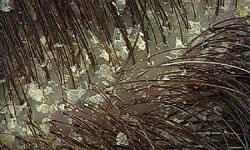
6. Dandruff. It’s when your scalp has flakes that may turn white, grey, or red when you start scratching them. Contrary to popular belief dandruff doesn’t just arise from shampoo and soap. It can also be brought on by stress,  climate, and too much oil secretions on your scalp. Dandruff thrives in a hot temperature so the itchiness doubles in intensity the more you stay in a humid room.

Scalp Itch

How to avoid itchiness on your scalp

It’s a hygiene issue that calls for a total hygiene solution.

  • Avoid too much sun exposure. This keeps the natural moist on your scalp.
  • Use a mild shampoo. Use a brand with a baby formula to avoid itching on your scalp.
  • Use a comb with rounded bristles. This way your scalp won’t have any scratches.
  • Avoid using hair blower. Air blower dries up your scalp and leaves an unreasonable itch afterwards.

A hair spa is also high on the list of recommendations, but your daily diet should take care of that. Vitamin E, zinc, and   magnesium rich foods make your hair strong and loveable.

Share and Enjoy:
  • Digg
  • Sphinn
  • del.icio.us
  • Facebook
  • Mixx
  • Google
  • Blogosphere News
  • Fark
  • Furl
  • HealthRanker
  • Live
  • Ma.gnolia
  • Propeller
  • Reddit
  • Slashdot
  • SphereIt
  • Spurl
  • StumbleUpon
  • Technorati
  • TwitThis
  • Wikio

Why Does My Skin Peel


Posted on November 16th, 2009 by by WhyDoes
If you like this post and want to receive updates from us, please subscribe to our RSS feed.

A skin peeling session sounds like a very appealing invitation to people with rough and pockmarked cheeks.  But to those with well toned- fair skin, skin peeling is not only pointless—it can even cause doubts. A peeling skin can be viewed in many ways, depending on where you’re coming from. So long as it doesn’t come with the great itch and blisters, you might even have a go at it. We’ll make it clear, then:  The peeling skin you’re concerned about here is the one that leads to problems.

Common causes of peeling skin

Your skin peels every day—sometimes you can see it, sometimes you can’t. Usually your skin peels off because of:     

1. Sunburn. The worst kind of skin peeling is one caused by sunburn. It’s unsightly and coupled with rashes, itchiness, blisters, and even fever. Done correctly, sun-burning actually gives way to new skin. And the reason why your skill peels off is because it’s part of the healing process.

Skin Why Does My Skin Peel

When your sun-burnt, your skin appears cooked on the outside. And you know the tell tale signs of bad sun burn. Over the next few days your skin may look intact as they cover the new sprout of skin cells underneath.

2. Naturally dry skin. People living in temperate countries are prone to have dry skin, so skin peeling on their hands, arms, and face is a natural occurrence. This usually happens after a bath. The peeled off skin are dead skin cells that have served their purpose and are now making way for new ones to take their place.  You can say it’s a normal phenomenon.  In fact, even as you shower and sponge, layers and layers of dead skin peel off. How you get dead skin is a question of many factors, of course, including climate. But you can remedy that by staying away from the heat every chance you get and using the right lotion for your kind of skin.

3. Skin diseases such as melasma an acne. These are caused by skin bacteria that eat away at your normal skin cells and leave behind the dead ones. So you have your skin peeling off in no time. Careful with the peeling, though–it is most times very itchy and can clog your skin’s pores. Later this may lead to further infection if not treated right away.

4. Peeling resulting from your use of irritating lotion and skin treatment. Not all skin exfoliating and treatment formula work the same way on the same person. Each of us reacts to different substances differently. And if you aren’t sure which one is right for you, better not experiment. Many popular brands have, in fact, skin drying additives.

How to avoid skin peeling

If it’s natural skin peeling you want to avoid, you can’t do anything about it. But if you want to take care of your skin in terns of making it healthy and retaining its natural glow, here’s what you can do:

1. Stay away from the sun if you’re not sun-bathing. The hours under the sun make no sense as it comes up at various times around the globe. But you know your tolerance—the moment it starts to bite, it’s no longer good for your skin. If you insist, wear non-irritating sun block.

2. Use a mild, preferably coconut oil based skin lotion. Skin powder may be good, but it only stays on the outside. A coconut oil-based lotion penetrates your skin and thus produces better effect by wiping off the dryness.

3. Don’t scrub your skin too much. Unless you’re too hairy, scrubbing your skin even with a  loofah  may result in coarseness in the long run. When you skin is wet, it’s tender enough that the slightest dab can wipe off dead cells from it.

4. East a diet rich in vitamin E and selenium. Vitamin E is known to make your skin taught and wrinkle-free. Vitamin E protects your skin from ultraviolet light and keeps your skin cells healthy. The richest sources of Vitamin E and selenium are eggs, fish, and dark colored vegetables.

You can’t hide under you skin.

Share and Enjoy:
  • Digg
  • Sphinn
  • del.icio.us
  • Facebook
  • Mixx
  • Google
  • Blogosphere News
  • Fark
  • Furl
  • HealthRanker
  • Live
  • Ma.gnolia
  • Propeller
  • Reddit
  • Slashdot
  • SphereIt
  • Spurl
  • StumbleUpon
  • Technorati
  • TwitThis
  • Wikio

Why Does Peroxide Bubble Burn


Posted on November 16th, 2009 by by WhyDoes
If you like this post and want to receive updates from us, please subscribe to our RSS feed.

Some wound disinfectants are not as crystal clear as hydrogen peroxide: One more reason why it seems to be the more preferred wound cleanser by many households. The other reason why you’d go with hydrogen peroxide is because it doesn’t leave as much pain on the wound as the other disinfectants.

Peroxide is used as a popular disinfectant to wounds and house ware.  Peroxide contains 5% hydrogen peroxide or less. Using it on your wound produces bubbling with a bit of pain. And when it does you get this feeling that the wound is cleansed.

Reasons why peroxide bubbles

It should be clear by now why hydrogen peroxide bubbles when it comes in contact with your wound:  

1. Your blood has an enzyme called catalase. Your cut has damaged cells that have catalase, so when it blends with peroxide it results in bubbles.  What happens is that the catalase turns hydrogen peroxide (H2O2) into water and oxygen gas.

Peroxide Bubble

2. Staphylococcus in your wound. They are found in all skin infections.  They belong to group A streptococcus. When  they react with peroxide and catalase in your blood’s neutrophil, bubbles result.

3. Bacteria. They are natural residents of your skin, but they are not abundant so long as your skin is kept clean all the time. The bubbles that are formed are actually oxygen bubbles coming from the catalase. When you put hydrogen peroxide on a slice of potato you see bubbles forming too.

What happens hydrogen peroxide on your wound

Hydrogen peroxide is less stable than water. In its normal state, hydrogen peroxide usually frees up a spare oxygen atom but it requires energy to start this process.  Apparently, your blood has that energy in the form of catalase. This helps in the consummation process but doesn’t get consumed itself.  What it does is  lower the energy requirement to break down hydrogen peroxide.  Hydrogen peroxide releases extra oxygen to become water. The free oxygen blends with oxygen from air to form two molecules of oxygen.

Uses of hydrogen peroxide

Aside from wound cleaning, hydrogen peroxide has many other uses, most of which are for home use:

1. As toothbrush cleaner. Hydrogen peroxide kills bacteria on the bristles and thus stops the spread of germs to other members of your family.

2. Shower cleaner. You need not bathe in hydrogen peroxide. What you do is spray hydrogen peroxide into the shower. Notice that even bugs and little insects get killed.

3. Washing dishes. Mix 3% Hydrogen peroxide with your dish washing liquid and it  can stop airborne bacteria dead in their track–so colds and flu don’t spread out further in your home.

4. Washing meat. With salt, hydrogen peroxide becomes a potent bacteria killer in chilled meat.

5. Cleansing of vegetables: With a pinch of salt, hydrogen peroxide, and cold water, you can rinse bacteria and germs off your favorite green leafy vegetables. Not only that—hydrogen peroxide keeps them fresh as well.

After a peroxide burn comes a cold feeling. But don’t be quick to blow your wound—unless you’re sure your mouth is equally clean.

Share and Enjoy:
  • Digg
  • Sphinn
  • del.icio.us
  • Facebook
  • Mixx
  • Google
  • Blogosphere News
  • Fark
  • Furl
  • HealthRanker
  • Live
  • Ma.gnolia
  • Propeller
  • Reddit
  • Slashdot
  • SphereIt
  • Spurl
  • StumbleUpon
  • Technorati
  • TwitThis
  • Wikio

Why Does Stretching Feel Good


Posted on November 16th, 2009 by by WhyDoes
If you like this post and want to receive updates from us, please subscribe to our RSS feed.

If you can’t find time to go for a massage, you can stretch and make your back pop and rattle, whichever comes first. One or the other makes you feel good that you come away with a smile on your face. Stretching is not only for the elderly nor for athletes. Look at cats and dogs—they love to stretch even with very little sleep.

Reasons why stretching makes you feel good

The extent to which you’re stretching is a matter of endurance, with or without a masseuse. But the feeling you get is one of satisfaction—always. Why is that?

Stretching Feel

1. Increased blood flow. When you stretch it’s not only your muscles and ligaments that are straightened out. Your blood vessels are stretched, too, that’s why doing it results in easy blood circulation. Most times when you’re too busy you don’t realize that your muscles squeeze your veins. Stretching tenses your muscles so they free up your squeezed blood–and off it goes to your lungs and heart. They change places with oxygenated blood that makes you breathe better.

2. Your heart and lungs can work well. When you spread your arms and stretch, you “open out” your chest cavity, thus your heart works doubly well. This results in regulated blood flow around your body, up to the brain, already with oxygenated blood.   With an expanded chest, your lungs and heart can pump more freely thus resulting in a more oxygenated blood getting into your bloodstream.

You notice that many people sleep in various “blood-choking” positions that discourage regulated blood flow. So when you wake up next day and stretch, your blood flow resumes to normal and you feel good.

Other Benefits of stretching

You can’t deny the over-all mood changing effects of body and muscle stretching. When you’re in a happy mood you can do wonders, and the world appears in rosy colors. In that mental state, any kind of disease, whether body or mind, is not even a remote possibility.  Other than that, stretching helps:

1. Relaxation of tense and tired muscles. Stretching eases up the pressure of bones and ligaments on your muscles.

2. Balances body coordination. When your muscles are well-oiled you become agile and lithe.

3. Helps you avoid muscle injury. Stretching puts your muscles in place so there’s no way they will go haywire and pull at each other.

Tips in stretching

As a beginner you don’t go into the more challenging stretching positions right away. In fact, you’d do well to stretch within your means. Like all of forms of exercise, stretching requires that you begin with the basics.

Stretching Feel

1. Drink a lot of water. When your muscles are well-hydrated you can stretch easily. So you can move your body around very easily.

2. Stretch regularly. Your muscles benefit from constant “easy” pressures exerted on it by stretching.

3. Don’t compete with others. Especially if you’re just starting, stretch at your own leisure and “listen” to your muscles and bones. They’d tell you if you’ve reached your threshold.

4. When you feel like stretching, do it. As said earlier, frequent positive stress on your muscle gets them working really well, so they “crave” for it. When you have made stretching a part of your morning ritual, indulge in it.

For all intents and purposes, if you can stretch both body and mind, that should be ideal.

Share and Enjoy:
  • Digg
  • Sphinn
  • del.icio.us
  • Facebook
  • Mixx
  • Google
  • Blogosphere News
  • Fark
  • Furl
  • HealthRanker
  • Live
  • Ma.gnolia
  • Propeller
  • Reddit
  • Slashdot
  • SphereIt
  • Spurl
  • StumbleUpon
  • Technorati
  • TwitThis
  • Wikio

Why Does Windows Installer Keep Popping Up


Posted on November 16th, 2009 by by WhyDoes
If you like this post and want to receive updates from us, please subscribe to our RSS feed.

We all have our brush with stubborn Windows Installer pop ups. And we’ve felt every imaginable shades of annoyance toward this. What’s most annoying is the phrase that says “Preparing to install” without saying or showing you anything else. If that doesn’t get at you, wasted time probably will.

What is Windows Installer

Windows installer helps you work with various software fairly easily. Windows installer makes installing, upgrading, deleting, and changing software, very easy. Other than that Windows installer gives you customized software installation. Moreover, Windows installer helps you manage shared resources and you can check applications even while Windows is running.

Windows Installer Popup

As it is, the best move is to understand what causes Windows Installer to pop up so you know where and how to stop it.

Why Windows Installer pops up

Like all kinds of freeze, the cause may be hard to tell at first look, so a closer inspection of these things must be done.

1. Incomplete set up. An incomplete set up leads to corruption of your PC’s registry.

2. Driver incompatibility. That is, if you’re running on 64th platform. See to it you install 64bit drivers for you applications.  Many computers running on x64 show this error after HP software has been installed.

If another program is causing it, uninstall and replace it with 64bit version of the installer.

Run problem application using compatible Windows XP SP3.

3. A new software or program has been installed but is not running. All along you thought the new software has been set, but in fact it’s not running well. In this case you need to have your CD-ROM to finish installing. Also, check the last program or software you installed. Windows installer should appear—then, put in the software for Windows to read it. You can now install the missing files.

How to stop Windows Installer from popping up

The easiest way to remedy this is to left-click Windows Installer where you should be able to see an option on disabling something. If not, do these two steps:

Method 1

  • Edit the “start” registry (specifically the .exe line that points to the HP software)
  • Click “Start Up List” at the top and look at the list to locate the controversial file. Select only that file to be deleted.
  • Exit the Reg cleaner and reboot (observe if changes have been made)
  • Where there’s change, go to “Program Files” on the main drive.
  • Locate the HP folder where the suspect software is and delete it

Windows Installer

Method 2

Another way to do it is: Un-register Windows Installer, and then re-register Windows Installer. To do this, follow these steps:

1. Click Run On the “Start menu
2. Key in “msiexec/unreg”  in the “Open box and press “Enter.”
3. Click “Run” on the start menu
4. Key in “msiexec/regserver” in the “Open box, and press “Enter.”

On second thought, not even the fastest computer today is inured to freezing—not when it has more programs and files than it can handle. But it’s consoling to think that  Windows Installer pops up because it wants to work right away.

Share and Enjoy:
  • Digg
  • Sphinn
  • del.icio.us
  • Facebook
  • Mixx
  • Google
  • Blogosphere News
  • Fark
  • Furl
  • HealthRanker
  • Live
  • Ma.gnolia
  • Propeller
  • Reddit
  • Slashdot
  • SphereIt
  • Spurl
  • StumbleUpon
  • Technorati
  • TwitThis
  • Wikio

Why Does Windows Vista Freeze


Posted on November 16th, 2009 by by WhyDoes
If you like this post and want to receive updates from us, please subscribe to our RSS feed.

The day you installed Vista into your PC, you heaved a sigh of relief. Slow days are over, you thought.  Called Microsoft’s next generation operating system, Vista has earned a name for ease of use and performance, far more and above Windows XP. For good reasons: Vista capitalizes on these features:

  • It can spy hardware problems
  • Its security feature covers the latest virulent threats like viruses and spyware
  • Even if your PC is attacked, Vista cushions the damage
  • Vista offers faster start up time
  • It has centralized desktop configuration.

But in spite all these, how come Vista freezes?

Vista Logo

Common reasons why Vista freezes

It’s not easy to lay a finger on the source of the freeze right away, but most experts agree it’s more like a hardware problem. In this case Vista apparently swallows its own words.

1. Device drivers. When they freeze, it means you need to uninstall some new software, change your configuration, or update your device drivers altogether.

2. Not enough RAM memory. Obviously your computer can’t handle several programs going at the same time, especially if you’re watching video with audio clips.

What to do when Vista freezes

Basic trouble-shooting would require you to:

1. Take your PC’s parts out. Keep in mind that Vista may not take well to upgrading from Windows XP. If you have booting problems, Vista actually boots into safe mode.  But you might lose a few files in the process, so back up your files.

2. Clean install. This is better than upgrading right away.

  • Boot into safe mode.
  • Check the event log in your PC’s Administrative tools.
  • Look closely for any errors in the messages in Start Up. If you see one, copy and  scan.
  • Check peripherals such as USB
  • Check Solution and Problem reports in the Control Panel.
  • View problem history—and check for application or errors in your computer’s device drivers.
  • Run a memory diagnostic tool—it could be Vista is freezing because of a hardware problem.

Some Vista issues

Vista Why Does Windows Vista Freeze

Vista doesn’t just face freezing problems but a number of technical concerns as well:

1. It requires higher hardware requirements. Vista is very choosy about the hardware to make it run, especially so in IT management environments where they want to use Vista for management.  For ordinary users like you, building up a PC’s hardware may be a bit daunting because you may not be up to buying a new one. The only consolation is,  some computers come with Vista already pre-installed.   

2. Not all hardware are compatible with Vista. Older printers, scanners, and features may not work well with Vista drivers. It’s not Microsoft’s issue– it’s probably the device maker’s.

3. Performance issues. It could be bugs—if you go by what many end users say. But these bugs are easily fixed with Windows update. The more performance related issue, however, is Windows update. Still, it’s no longer a major bone of contention with the coming of Vista SP1.    

In answer to all of these, Vista continues to reinvent itself. As this piece is written many things have already changed. And more lives will surely change.

Share and Enjoy:
  • Digg
  • Sphinn
  • del.icio.us
  • Facebook
  • Mixx
  • Google
  • Blogosphere News
  • Fark
  • Furl
  • HealthRanker
  • Live
  • Ma.gnolia
  • Propeller
  • Reddit
  • Slashdot
  • SphereIt
  • Spurl
  • StumbleUpon
  • Technorati
  • TwitThis
  • Wikio